So You Got a Dog, Now What? Surviving Week One.
Stanley
12/15/20254 min read
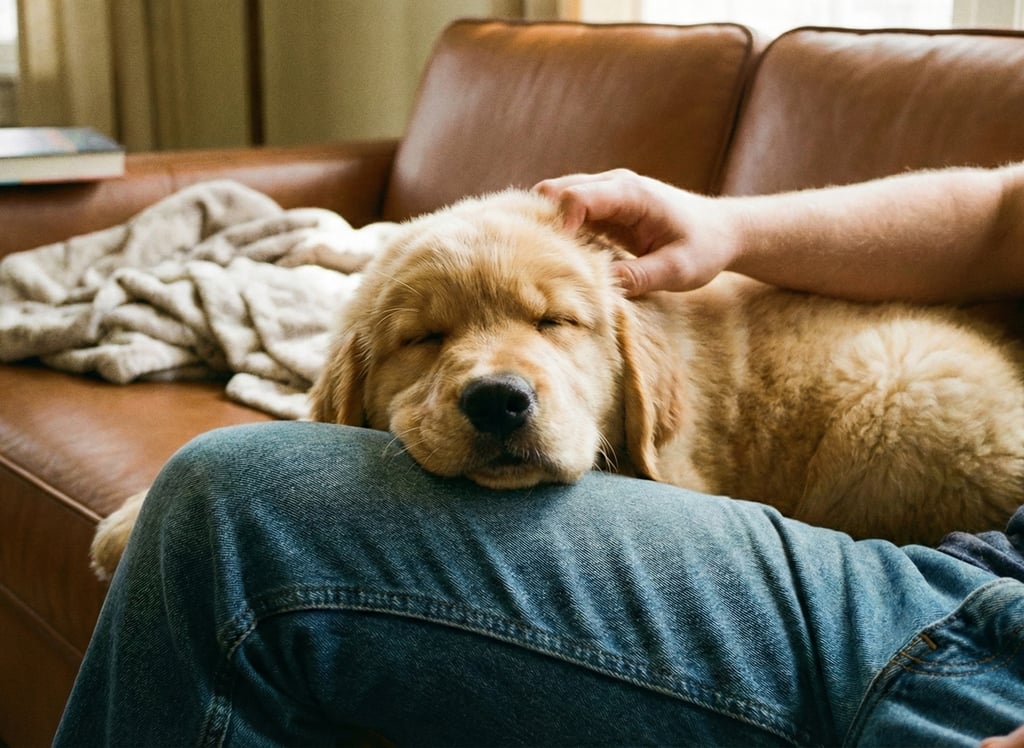
Congratulations! You’ve just brought home a new puppy or dog. The oxytocin is flowing, the Instagram photos look great, and excitement is through the roof.
Then, you get home. The dog pees on your favorite rug, tries to eat an electrical cord, and looks at you with blank confusion when you say, "No."
Take a deep breath. As a trainer, I can tell you that the "Oh no, what have I done?" feeling is normal. While it’s tempting to try and turn them into a soldier on day one, your only real goals today are safety, management, and keeping your sanity intact.
Here are 10 essential tips to help you (and your furniture) survive the first week.
1. Create a "Yes" Space (Management is Everything)
Before you even think about training, you need to puppy-proof. And I don’t mean just moving the shoes; I mean getting down on your stomach and looking for anything that looks delicious to a creature that explores the world with its mouth.
Set up a designated "safe zone"—a crate, a pen, or a gated-off room. This isn't doggy jail; it’s their bedroom. It should have a bed, water, and chew toys. This prevents bad habits before they start. If you can’t supervise them 100%, they go in the safe zone. Remember: A restricted pup is a pup that isn't eating your drywall.
2. Lower Your Standards (Start with the Real Basics)
On day one, forget "Stay" or "Heel." That’s like asking a toddler to do calculus. Keep it light.
The Name Game: Say their name, give a treat. Repeat until they look at you like you are a magical treat-dispensing wizard.
Luring: Use a piece of kibble to guide their nose up to get a "sit."
The Jackpot: When they do something you like (even by accident), celebrate like they just won the Super Bowl.
3. Study Your New Roommate
Bonding isn't just cuddling; it’s reconnaissance. Watch them. Are they bold? Shy? Do they chase feet? Learn their "tells."
The "Potty Waddle": Sniffing in circles usually means a puddle is imminent.
The "Whale Eye": If you see the whites of their eyes, they are stressed—give them space.
The "Zoomies": Sudden explosive energy means they are overtired. Invest in this observation phase now, and you’ll save yourself a lot of headaches later.
4. The "Potty Party" Routine
Dogs love routine. They also love peeing on soft surfaces. Your job is to align those interests. On day one, you are the clock. Take them out:
Immediately after they wake up.
Immediately after they eat.
Immediately after a play session.
If they look at you funny. When they go outside, throw a "Potty Party"—high-pitched voice, praise, treats. Make the neighbors think you’re crazy. It’s worth it for clean floors.
5. The "Naked" Feeling (Leash Intro)
If your dog freezes up when you put a collar on, don't panic. To them, it feels weird—like wearing a turtleneck that’s two sizes too tight. Let them wear the collar inside for short bursts while they eat or play so they associate it with good things. You can even let them drag a light leash around the house (supervised!) so they get used to the weight. Don't pull them yet; just let them realize the "snake" following them isn't dangerous.
6. Be a Pez Dispenser (Positive Reinforcement)
You are not just the owner; you are the source of all things good. Ditch the food bowl for the first few days. Hand-feed them their meals as rewards for good behavior.
Did they look at you? Reward.
Did they keep four paws on the floor? Reward.
Did they not bite the cat? Double Reward. You are building a "bank account" of trust. Deposit heavily on day one.
7. Patience (and Deep Breaths)
Your new dog is an alien on a new planet. They don't speak English, they don't know the rules, and they are probably stressed. If they chew the wrong thing or have an accident, do not scold. Screaming only teaches them that you are scary and unpredictable. Instead, interrupt the behavior gently ("Ah-ah!"), redirect them to the right thing (a toy), and praise them for taking it. If you feel your blood pressure rising, put the dog in their safe zone and go eat some chocolate.
8. Toys > Toes (Redirecting the Teeth)
Puppies explore with their mouths. If you have a puppy, you currently own a tiny land shark. When—not if—they nip you, don't yelp or pull away (that makes you a squeaky toy). Instead, become boring. Freeze. Then, immediately shove a proper toy in their mouth. Teach them: "Skin is boring; plush hedgehogs are a party."
9. Socialization (Quality over Quantity)
There is a myth that you need to introduce your dog to everyone immediately. Don't. Day one is overwhelming enough. Introduce family members one at a time. Keep it low-key. Let the dog approach you, not the other way around. If you have other pets, keep them separated or do a "sniff test" through a gate. You want your dog to think, "Hey, people are chill," not "Why is everyone grabbing my face?"
10. Define "Success" Loosely
At the end of the day, ask yourself:
Is the dog alive?
Is the house standing?
Did we have one nice moment? If yes, you crushed it. Snuggle up (if they are a snuggler) or just watch them sleep (when they are finally essentially angels). The bond you build today is the foundation for many years to come. You’ve got this.
Questions? Reach out anytime!
Contact
Stanley@DogDegree.com
© 2026. All rights reserved.